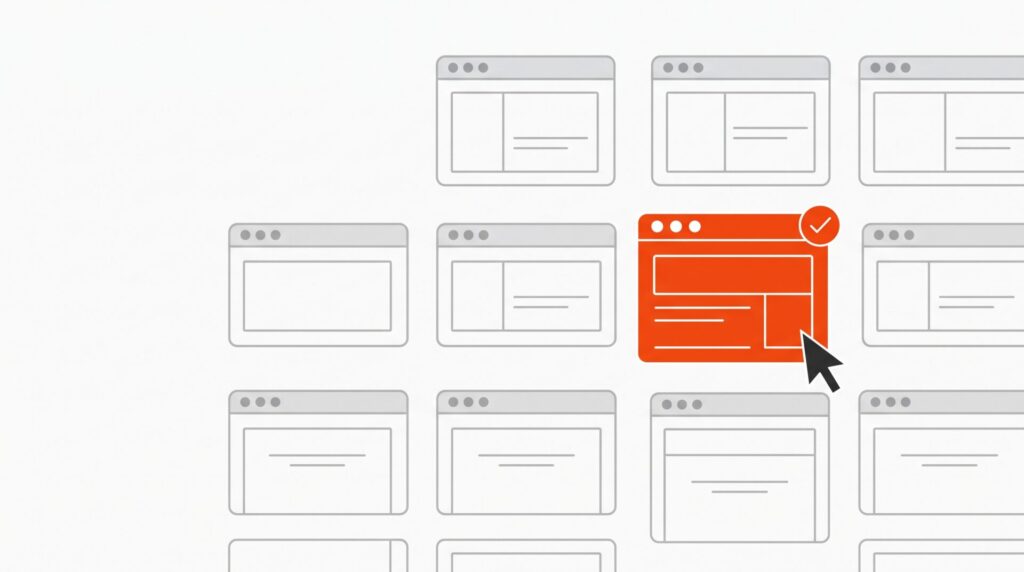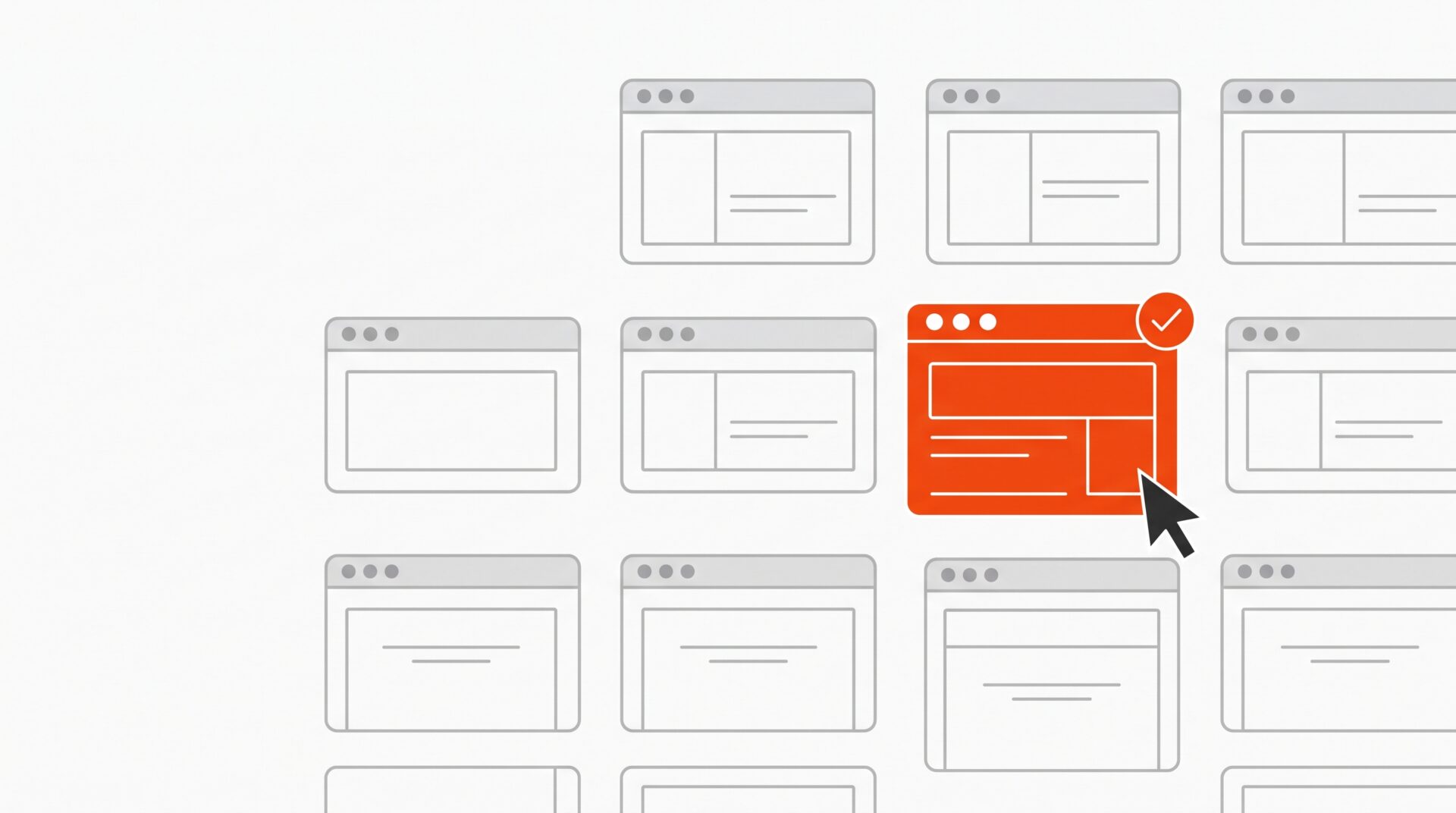
AI can now generate twenty layout options in a minute. That doesn’t shrink a designer’s value, it relocates it. The scarce skill is no longer producing options. It’s building the standard a client uses to choose the right one, and can defend afterward. This piece breaks down why “here’s the homepage” reviews are starting to fail, what clients are actually paying for now, and a repeatable operating model that turns an opinion war into a decision every time.
A client can now open an AI tool, type one sentence, and have twenty homepage directions before their coffee gets cold. And yet most client reviews still open exactly the way they did five years ago: share a screen, ask “what do you think?”, and wait for the room to react.
Most design education and most agency processes still treat that opening move as fine. It is not fine. It is the single most expensive habit left in the modern design process.
The Job Description Nobody Updated
OLD ASSUMPTION: Designer produces a screen. Client reacts to it.
NEW REALITY: Designer builds a standard. Client uses it to decide, and can defend that decision afterward.
The competitive advantage was never having a better eye than the client in the room. It is building the standard the room uses once opinion stops deciding anything, because now everyone in that room, including the client, can generate their own twenty options before the meeting even starts.
The Ritual We Never Questioned
Most design processes, including good ones, still run on a version of this sequence: brief, concepts, internal review, client presentation, “what do you think?”, a revision round, and eventually an approval. Nothing in that sequence is broken on its own. The failure point is the single step in the middle: the moment a finished screen gets shown before anyone has agreed on what “right” means.
The Opinion Tax
Call it the opinion tax. Without a written standard, every reaction in the room carries equal weight, whether or not anyone can tie it to the business. The CEO doesn’t like the blue. The marketing lead wants the logo bigger. Someone’s spouse saw it over their shoulder and had a view too. None of these reactions are wrong, because there is nothing they are wrong against. The room has been handed an object and asked to have feelings about it.
That tax gets paid in revision rounds, in diluted decisions, and in a final product that reflects whoever spoke last instead of what the business actually needed. It was expensive when options were hard to make. It is worse now that they are not.
The Day Options Became Free
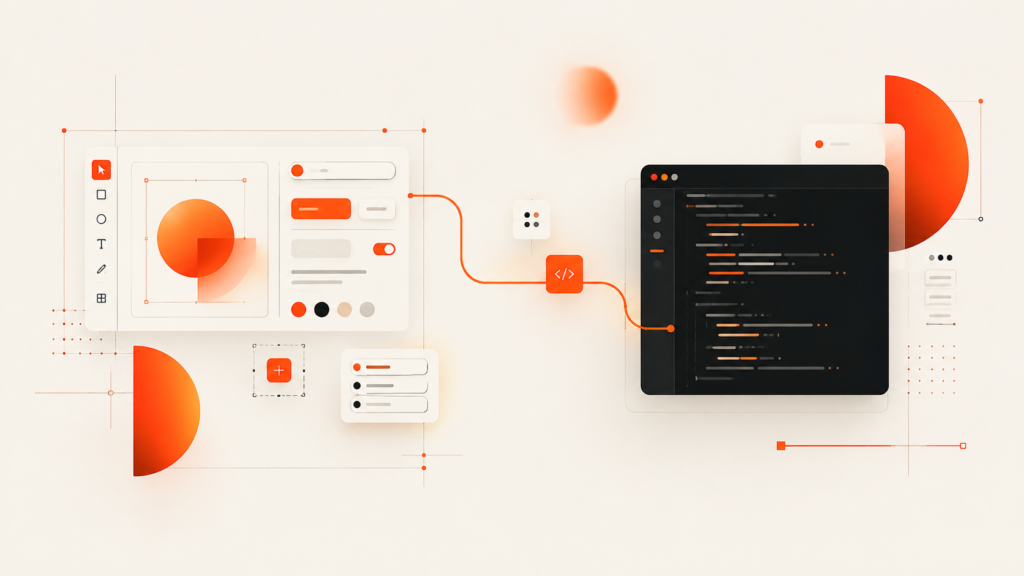
AI coding and design tools did not just speed up production for you. They made production available to the client directly. A founder with no design background can now generate a dozen homepage directions on their own laptop before your first draft is due. The scarce resource flipped overnight, from “who can make an option” to “who can tell you which option is right, and why.”
That flip is the entire argument of this article. It is not a threat to designers. It is a promotion, for the ones who notice it in time.
The Standard Shift: From Screens to Decisions
BEFORE: Screens, then reaction, then revision, then approval, maybe.
AFTER: Goal, then options measured against that goal, then a reasoned choice, then a decision the client can defend.
Everything below is one way to build the “after” version into a normal client review, without adding a single extra meeting.
What a Decision Actually Sounds Like
Picture a typical pricing page review. Under the old model, the feedback sounds like “the cards feel busy” and “can we try green?” Under this model, the client says instead, “Our goal is demo bookings, and option B gets closer because the call to action is the first thing you see.” Same screens, same client, a completely different conversation. One produces a revision list. The other produces a decision, in the same thirty minutes.
How to Run the Room
What do you put in front of the client before they see a single screen? A one sentence goal, in the client’s own words, written where everyone can see it for the rest of the meeting: “Increase demo bookings from the pricing page,” not “make it feel modern.” This single sentence is the entire standard. Every option gets measured against it, not against anyone’s preference.
How do you keep feedback about the goal instead of personal opinion? Change the question you ask. Not “what do you think?” but “which of these gets closer to the goal, and why?” The word “why” is doing the work. “I like it” stops counting as an answer. “This one puts the price above the fold, and our goal is bookings” does.
How do you close the meeting with an actual decision? Ask, “What would you need to see to approve this today?” This converts a vague “let me think about it” into either a decision on the spot, or one or two concrete next steps. The word “today” tells the room that a decision, not a discussion, is the point of the meeting.
Where does AI fit into this? Exactly at the second question. Use it to generate three genuinely different directions instead of one polished guess, then measure all three against the goal from question one. AI cannot write that goal for you, and it cannot read the room well enough to know when “we’ll circle back” means “I’m not convinced.” Widening the option set is its job. Choosing between them is still yours.
Isn’t This Just Manipulation?
It is a fair worry, and it deserves a real answer, not a dismissal. The difference is where the standard comes from. The goal in question one is written in the client’s own words, before any option exists to root for. If a competing option, including one you didn’t design, measures up better against that goal, it should win. The questions are neutral because the standard was built before anyone had a favorite.
What I’m Not Saying
This is not a case for turning every client conversation into a formal interrogation, or for stripping out craft and strong opinions. You do not need to run all three questions on every micro decision, and you do not need to treat the client’s stated goal as beyond challenge if it is genuinely wrong for the business. What you do need is a written goal before any screen appears, reasons attached to every reaction from that point on, and an actual close to every review, whatever the client decides.
The Decision Loop
A short, repeatable loop, worth naming so it survives past this one article. First, anchor: write the one sentence goal before anything gets shown. Second, compare: put every option, including AI generated ones, next to that goal and ask which gets closer, and why. Third, decide: close with the “what would you need to see today” question, every single time. Fourth, document: write down the goal, the choice, and the reason in one line, so the decision can be defended to someone who was not in the room.
Old Review vs. New Review, Side by Side
Kickoff: old approach was a mood board with no stated goal. New approach is a one sentence goal, written down, before any visual exists.
Concept review: old approach was “what do you think?” New approach is “which gets closer to the goal, and why?”
Client hesitation: old approach was another revision round. New approach is “what would you need to see to approve this today?”
Sign off: old approach was a verbal yes in the room. New approach is a decision the client can repeat and defend to their own boss afterward.
Your First Move This Week
This week, run one upcoming review with just the first question: get the goal in writing before you show anything, and watch how much of the usual back and forth simply does not happen. This month, add that one sentence goal into your standard proposal and review agenda templates, so it stops depending on you remembering to ask. Ongoing, keep a short running log of goal, decision, and reason for every project. Six months of that log is a case study nobody else can write, because it is proof of judgment, not just proof of output.
Why a Good Eye Won’t Save You Anymore
The designers who lose work to AI will not be the ones with a weaker eye. They will be the ones who never gave anyone in the room a reason to trust their judgment in the first place. A screen invites an opinion. A decision loop invites a commitment. Only one of those survives contact with a client who can generate their own options for free.
If a client asked you right now what they are actually paying for, could you answer in one sentence, and would they believe you?
This connects to my last blog on the handoff tax. Both come from the same shift: once a part of the job gets cheap and abundant, whether that is implementation or options, the designer’s value moves to whatever cannot be generated, judgment about this business, in this room, right now. Let’s explore opportunities in this new shift and grow together.